Offshore module failures rarely begin with steel. They begin with assumptions.
Many offshore module issues can be traced back to factors like missing a load case, underestimating vessel motions, or overlooking a critical fatigue hotspot during the development of the design head. By the time cracks appear offshore, the real mistake was usually made months or sometimes years earlier during the verification process.
Design head calculations matter; they aren’t just an engineering deliverable or class requirement. In offshore engineering, they help establish the environmental and loading conditions a module is expected to withstand throughout its lifecycle during fabrication, transport, and installation, and then through decades of operation at sea. In today’s offshore environment with stricter ABS requirements, more complex facilities and increasingly dynamic operating conditions, getting the design head wrong can become very expensive very quickly.
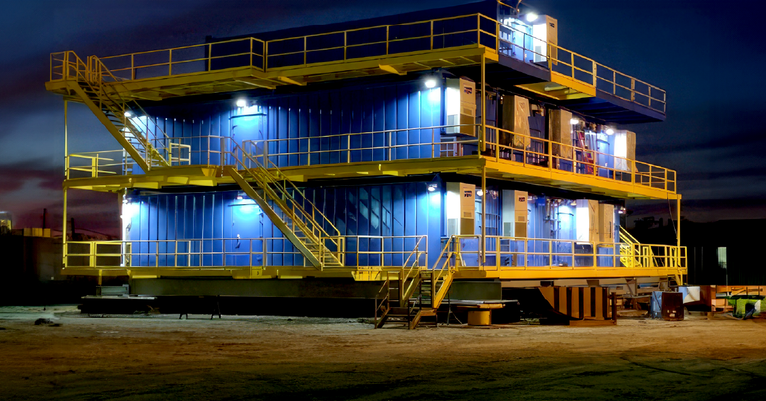
Offshore Modules Experience Multiple Load Conditions
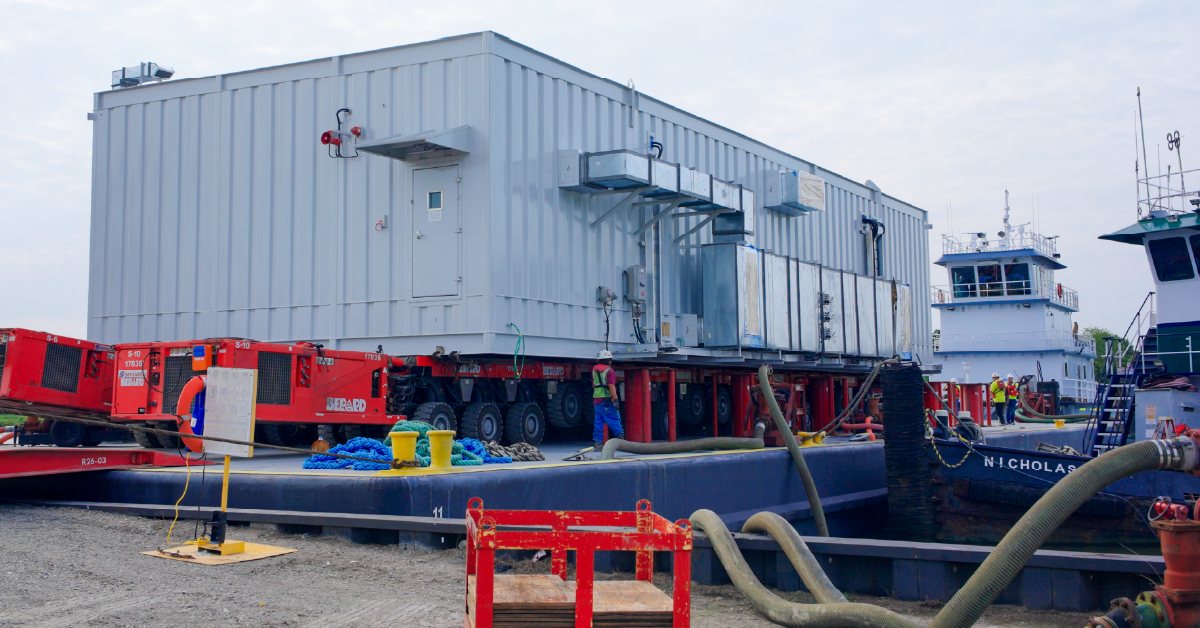
One of the biggest differences between offshore structures and conventional buildings is the complexity of the loads they experience. An offshore module doesn’t simply carry weight, it’s also subjected to continuous motion. Wind pushes laterally while waves generate accelerations from below. Currents shift loading patterns. Green water slams exposed equipment. Rotating machinery introduces vibration. Tanks filled with fluid begin to slosh dynamically.
There are also transitional phases that engineers often underestimate: lifting, transport, skidding, installation, startup, shutdown and extreme storm events. Each phase creates a different set of structural demands.
A module that performs perfectly during operations may still fail during transportation or installation if those conditions were not fully captured in the design head. Offshore engineering is rarely governed by a single load case. It is governed by how multiple conditions interact over time. Offshore design verification revolves around four key limit states:
- Ultimate strength
- Fatigue
- Serviceability
- Accidental loading scenarios, such as blast or dropped objects
The challenge is not simply checking them independently. The challenge is understanding how they overlap throughout the module’s lifecycle.
Understanding Offshore Fatigue Risks
A module may pass every major strength check and still accumulate microscopic damage offshore every day due to wave-induced motion, vibration, thermal cycling and host platform accelerations. Over time, those repeated stress ranges begin attacking weld details, connection points and local structural discontinuities.
Experienced offshore engineers pay close attention to fatigue methodologies, corrosion assumptions and dynamic amplification factors. Small inconsistencies in those assumptions can dramatically alter predicted fatigue life.
Many of the most serious engineering problems do not result from calculation errors, but from inconsistent assumptions made during design development. Environmental criteria, vessel motions, load combinations, dynamic amplification factors and fatigue methodologies must remain aligned across all analyses. Individually, small discrepancies may appear insignificant. Collectively, they can lead to unconservative results and inaccurate representation of how the structure will perform offshore.
This is why the Basis of Design document matters so much offshore. More than a formality, it becomes the single source of truth that aligns environmental criteria, load combinations, fatigue methodology, interface assumptions and acceptance criteria across every discipline involved in the project.
ABS Expectations Are Changing
As offshore facilities become more integrated and technically demanding, ABS expectations are evolving with them.
Today, reviewers expect more than calculation outputs. They want to see traceability, including clear documentation showing how loads were developed, how dynamic effects were treated, how fatigue assumptions were selected and how the module interacts with the host structure under real offshore conditions.
That shift is becoming even more important with ABS consolidating offshore rule sets into its updated Offshore Rules framework. The industry is moving toward a more unified verification philosophy in which global behavior, local stresses, fatigue performance, accidental loading and interface behavior are evaluated as part of an integrated structural analysis.
In complex projects, hand calculations alone are no longer enough. Nonlinear FEA, advanced fatigue analysis, CFD studies and detailed load sequencing are becoming increasingly common, especially for high-consequence offshore facilities.
Offshore Modules and the Overall Structural Design
Design head calculations are only one part of the overall structural design process. They establish the environmental and loading conditions that govern the structural design of offshore vessels and marine facilities throughout their operational life.
The selected design head influences wave loading, hydrostatic pressures, global structural demands, fatigue performance and classification compliance. Conservative assumptions can increase construction costs, while unconservative assumptions can create significant safety and reliability risks. The challenge is finding the appropriate balance, based on the vessel’s intended operating environment and service life.
If those conditions are not properly understood, a module may appear structurally sound in isolation, while still creating unacceptable loads or demands elsewhere in the system.
The best offshore engineers understand this early. Design head calculations help establish the conditions a module is expected to withstand throughout its lifecycle, from fabrication and transportation to installation and offshore operations. They are used to predict structural response, since once the module is installed, every mistake becomes harder to fix, and riskier to ignore. In offshore engineering, the assumptions made at the beginning of the project can influence project costs, reliability and long-term performance for years to come.
Every offshore project presents unique structural and environmental challenges. If you’re planning a new offshore module, Armoda can help you evaluate your project requirements and develop a solution designed for your operating environment.